Agree on decorative boundaries
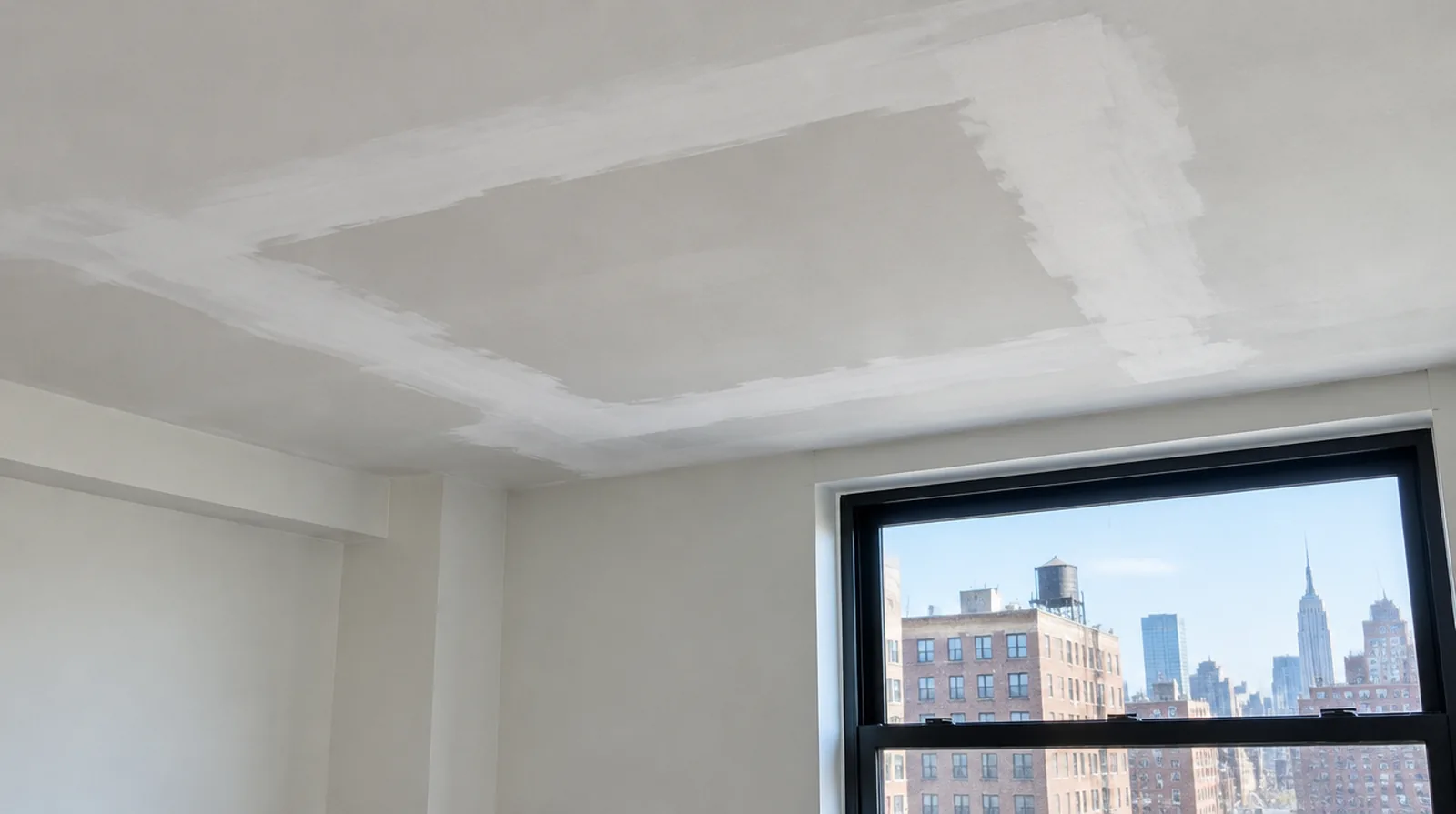
Repairing the damaged board and restoring a uniform decorative finish are related but distinct tasks. Review a larger painting boundary if local decoration would leave a conspicuous difference around the patch. If the finish paint is already chosen, share its sheen and color early because those choices influence how preparation of the surface is judged.
Match the board assembly
Replacement board should suit the current thickness and any applicable wall or ceiling assembly requirements. Water resistant products do not remove the need to correct the conditions that caused the damage. If the existing finish is unusual, keep a small reference sample or a close photograph to support the discussion about blending and restoration.
Verify drying readiness
A surface that feels dry can still conceal moisture in insulation or framing. The project should identify who verifies the cavity is ready before replacement panels close it again. When the work area includes a doorway, check the clearance for panel movement as well as the amount of space available for finishing tools.
Finish after moisture control
Tape and joint compound belong on stable dry material rather than a damp or deteriorating substrate. Give each finishing layer time to dry rather than trapping dampness under additional material. For a repair that crosses several surfaces, measure the affected planes separately so the estimate can explain where each finishing treatment starts and stops.
Define selective removal
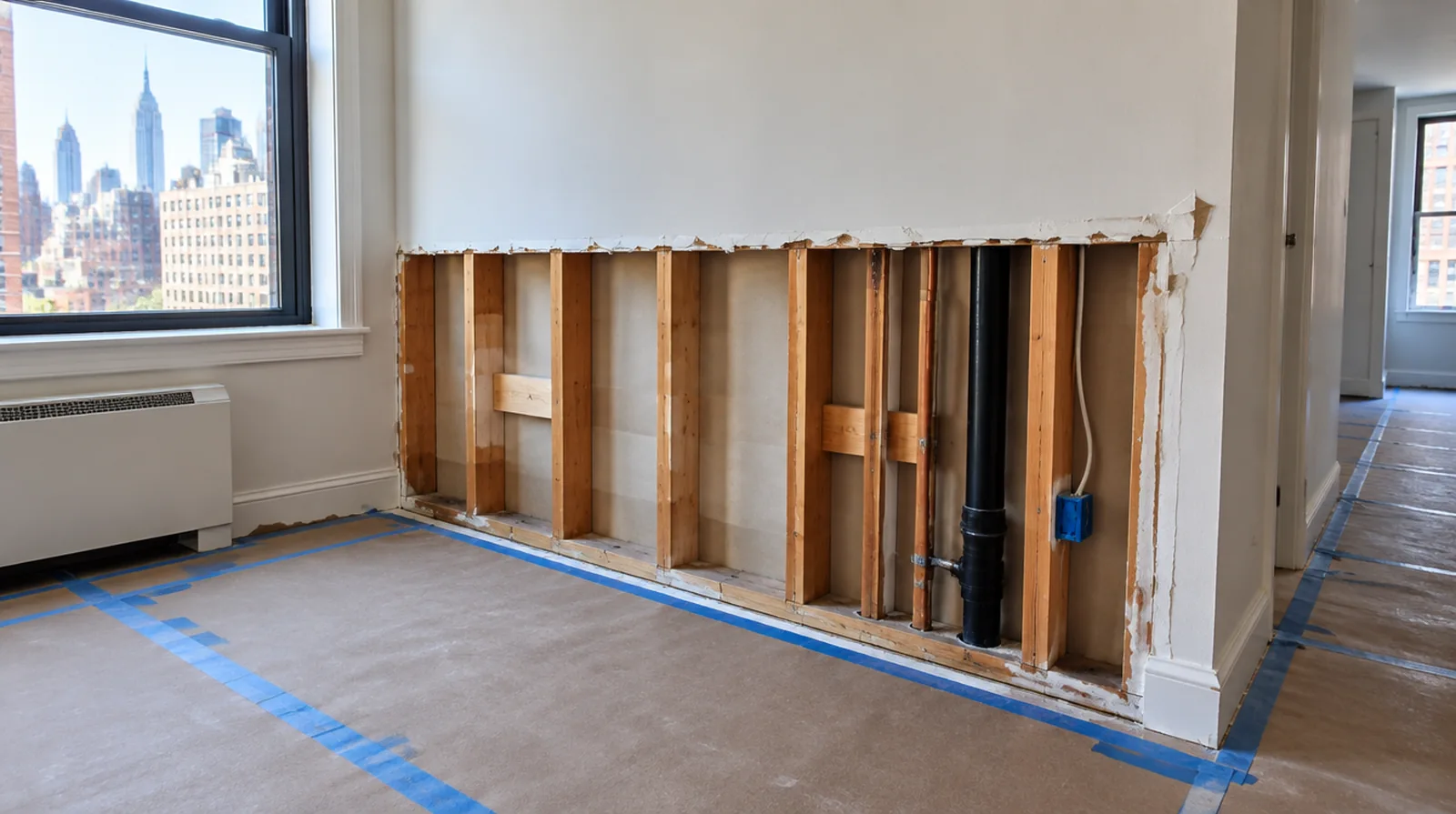
Removing a controlled section provides access for assessment while preserving material that remains sound. The cut boundary also needs to accommodate backing and a practical surface transition. If the completion date matters most, allow for intervals between coats as well as active labor instead of assuming the entire process happens continuously.
Treat remaining discoloration
Suitable primer may be needed to prevent old water marks from bleeding through the new paint. Establish that the stain is inactive before choosing a coating system for the repaired surface. For a limited patch requiring substantial setup, assess the complete package of access and protection instead of relating cost only to the opening size.
Inspect concealed components
Insulation, electrical work and plumbing exposed during removal may require separate assessment or replacement. Those decisions ought to be resolved before the drywall portion of the repair moves forward. At a ceiling or wall containing fittings, assign removal and reinstatement duties for the affected devices before repair access is needed.
Rebuild supported edges
The new board section must connect firmly to suitable backing or sound framing. A stable repair perimeter helps avoid later cracking where replacement board meets the original surface. For a surface carrying numerous paint layers, discuss whether differences in the retained profile or sheen justify decorating a broader area.
Record the completed scope
Retain useful information about source repairs, material replacement and any drying checks performed by other trades. This record helps explain what the drywall repair covered and what maintenance remains the property owner responsibility. For a project with several trades, agree which inspection or handover point must happen before the next person starts work.
Resolve the water source
Replacement drywall should follow correction of the leak, condensation or other source that caused the damage. A cosmetic cover will not stop water from entering the same assembly again. When the history of a repair is uncertain, note when it became visible and whether its appearance has altered across differing seasons.
Project context in New York
Building access arrangements and any required approvals should be settled independently of the surface repair itself. If the apartment remains occupied, decide which space stays available for everyday use and how material will be stored between visits.
Scope questions before finishing
When painting is outside the proposal, describe the remaining decorative preparation clearly so another contractor can price that stage accurately.
If the wall surface work belongs to a broader renovation, coordinate its order with flooring, cabinetry and trim rather than scheduling finishing in isolation.
If a distinct painter completes decoration, agree the condition of the handed over surface and assign responsibility for small final corrections.
When the wall has strong reflected light, look at the full plane rather than judging only the narrow strip immediately beside the patch.
For work spread across distinct planes, record their dimensions separately and describe the boundary of the treatment on each surface.
If the surface condition is uncertain, allow for an assessment that can distinguish stable material from layers that ought not to be covered.
Where existing floors will remain, specify protective measures and review the path used by panels, equipment and finishing tools.
Where occupants have dust sensitivity concerns, agree containment and cleaning measures before settling the way the room will be staged.
While a removed panel exposes the wall surface cavity, complete the necessary review of concealed work before replacement board closes the opening.
If materials must cross common building areas, plan the protection and access route so other occupants are not needlessly obstructed by deliveries.
If the problem developed after another renovation, explain which nearby materials or building systems changed before the damage became visible.
If occupancy must resume on a certain day, include the later primer and paint stages in the timetable as well as drywall installation and finishing.
Explore the New York drywall overview for related options, or read the project planning information before arranging the next stage.
More planning details for New York
A New York apartment project can be constrained by the route into the room before the size of the repair matters. Ask about lift reservations, shared corridor protection and the space available to turn a full board at the apartment entrance. A measured sketch of the route is more useful than assuming that a sheet fitting the wall will fit the building.