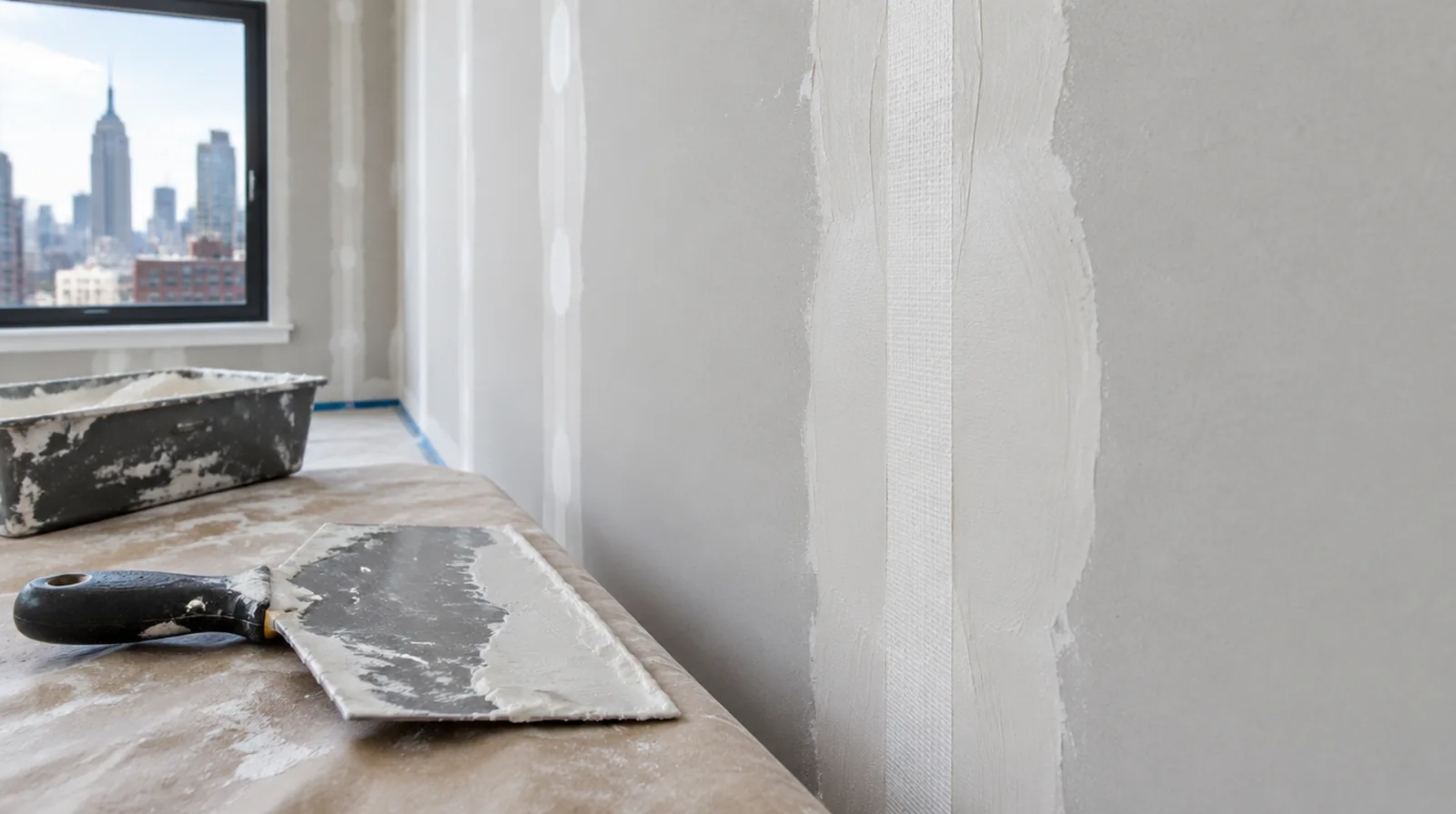
Coordinate with the painter
Primer may expose small imperfections that were difficult to see on the raw white surface. Establish responsibility for those final adjustments and any review after priming before the work starts. If the current finish is unusual, keep a small reference sample or a close photograph to support the discussion about blending and restoration.
Consider a skim layer
Broad grazing light can reveal a difference in texture between the paper face and finished joints. A suitable skim treatment could help create a more uniform surface when the specification calls for it. If the wall surface work belongs to a broader renovation, coordinate its order with flooring, cabinetry and trim rather than scheduling finishing in isolation.
Build the seam gradually
Successive coats widen the finished area and soften the transition from joint to board face. Square cut sheet ends need particular care because they do not offer the recess of tapered factory edges. When the decorative coating has been selected, tell the finisher its intended sheen and color while the substrate preparation standard is still being agreed.
Keep external corners straight
Corner bead provides a consistent line but needs secure installation and sufficient compound coverage. Resolve distortion or damage to the bead before successive coats make correction more challenging. For a repair that crosses several surfaces, measure the affected planes separately so the estimate can explain where each finishing treatment starts and stops.
Cover fastener heads
Fill fastener depressions level with the surrounding face without creating avoidable mounds. A screw that protrudes or has broken the paper should be addressed before it is concealed. Where a future fixture will be installed, coordinate any required backing while the cavity is accessible rather than reopening the completed wall.
Assess the hung board
Finishing cannot fully correct unsupported edges or panels that sit on distinct planes. Fastener depth and board alignment should be checked before joint treatment begins. When reviewing the finished work, use the agreed lighting and natural room viewpoints so the assessment reflects the intended use of the space.
Use controlled sanding
Sanding should refine small tool marks rather than grind away a badly shaped joint. Dust extraction and protection matter even for a room with only a few seams. For a surface that will receive wall covering, share the product requirements early so the finishing stage supports the planned decorative treatment.
Allow genuine drying time
Do not judge a coat ready solely because its outer face appears firm. Temperature, air movement and room humidity affect the interval between finishing stages. For a repair that crosses several surfaces, measure the affected planes separately so the estimate can explain where each finishing treatment starts and stops.
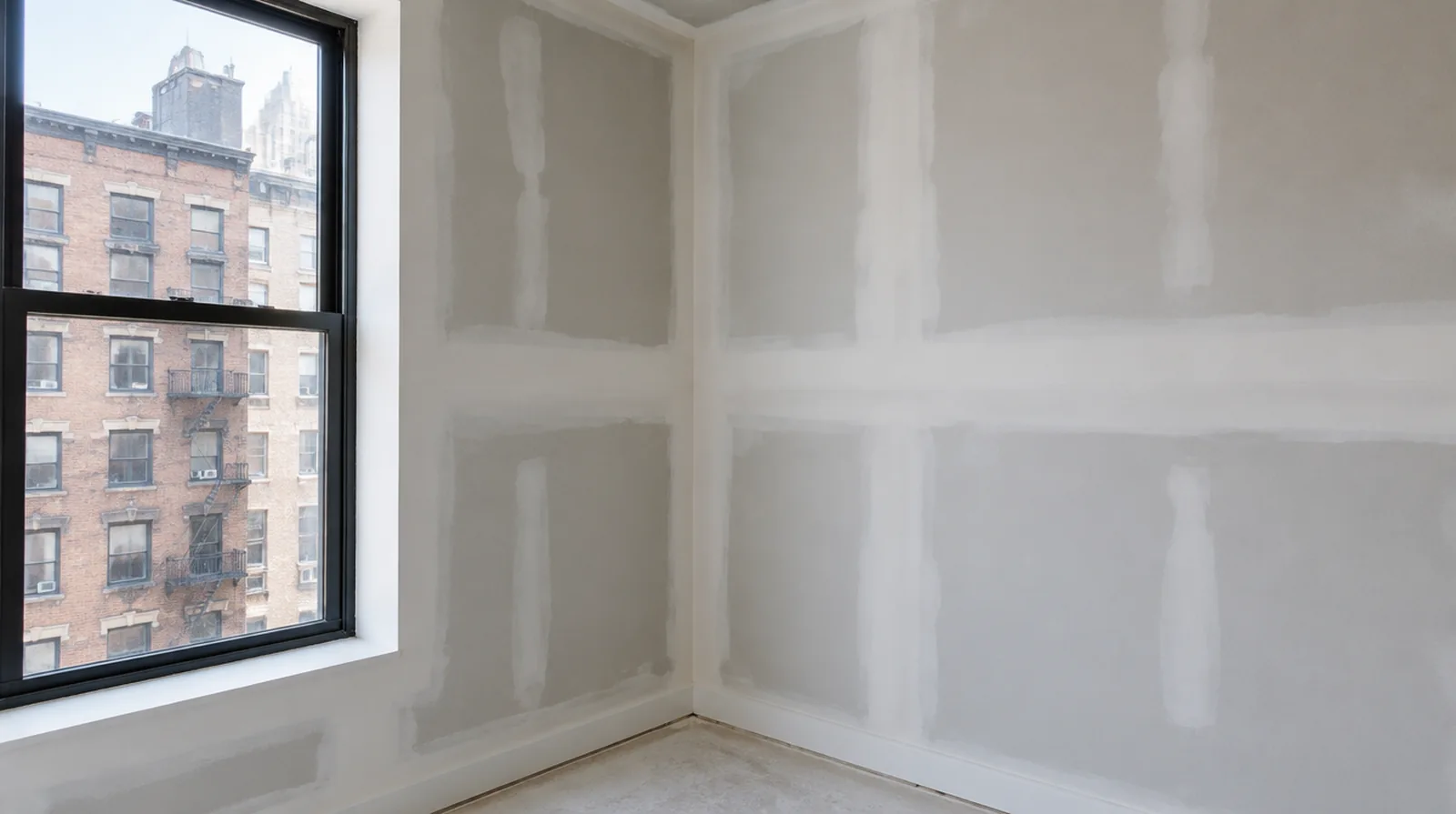
Choose joint materials
Bedding coats and final coats serve different purposes and may use different compatible compounds. Choose compatible compounds with regard to their intended purpose, the room and the relevant product instructions. Where existing floors will remain, specify protective measures and review the path used by panels, equipment and finishing tools.
Inspect the whole wall
Review corners, returns and service openings as well as the straight seams in the main wall. Use the intended room lighting where workable and include an oblique view across the plane. If materials must cross common building areas, plan the protection and access route so other occupants are not needlessly obstructed by deliveries.
Project context in New York
Ask about lift reservations, shared corridor protection and the space available to turn a full board at the apartment entrance. A measured sketch of the route is more useful than assuming that a sheet fitting the wall will fit the building.
Scope questions before finishing
For a small repair with extensive setup, compare the total scope rather than assuming the price should follow the hole dimensions alone.
At an edge beside built in furniture, state whether the obstruction will be removed or whether finishing stops at the section that can be reached.
When damage followed other building work, describe the nearby alterations and the sequence between those changes and the first visible defect.
Where a neat final edge matters, agree whether the finish ends against existing trim or whether that trim will be removed and replaced.
For a project with several trades, agree which inspection or handover point must happen before the next person starts work.
When photographs are used for an initial discussion, include a wide room view as well as a close view so scale and surrounding finishes are understandable.
When a wall has repeated defects, keep a record of earlier repair attempts so a new assessment does not simply repeat an unsuccessful approach.
Where the quoted work stops before painting, request an explicit description of what remains so the next decorating stage can be priced realistically.
Where several contractors share the renovation, identify the inspection and handover milestones that determine when each following stage can proceed.
Where light reflects along the wall surface, inspect the complete plane instead of limiting the review to the edge immediately next to the repaired section.
If an independent painter completes decoration, agree the condition of the handed over surface and assign responsibility for small final corrections.
For a wall receiving a decorative covering, provide its preparation requirements early adequate for the drywall finish to support that product.
Explore the New York drywall overview for related options, or read the project planning information before arranging the next stage.
More planning details for New York
A New York apartment project can be constrained by the route into the room before the size of the repair matters. Inside the room, tall windows can send light across a long wall and reveal a poorly feathered transition. Discuss that viewing angle before choosing the finishing boundary.