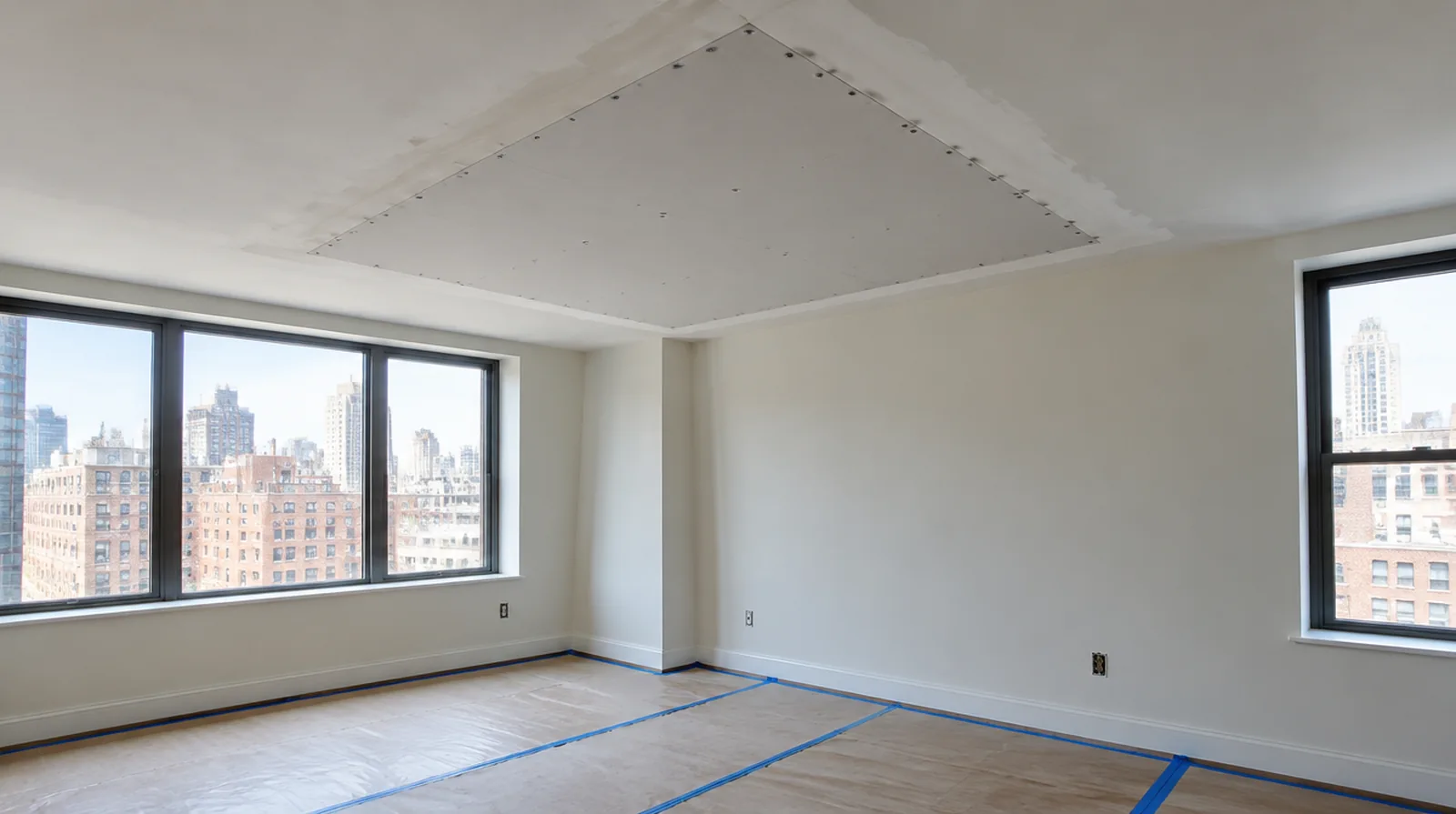
Add reliable backing
A ceiling patch needs fastening support on its edges rather than relying on compound to carry its weight. Matching the panel thickness helps avoid a visible step between old and new surfaces. For an older repair with no clear history, describe when the mark first appeared and whether it has changed through more than one season.
Discuss texture expectations
A smooth ceiling and a textured ceiling need different finishing plans around the repaired section. An agreed sample can show the likely limits of a local texture blend before the full repair proceeds. Where a surface has been painted many times, consider whether differences in texture or sheen will require a wider decorative treatment.
Set the repainting scope
A small fresh white patch can stand out against an older ceiling even when the surface is level. Painting to a natural boundary may be preferable to touching up only the repair. When the wall has strong reflected light, look at the full plane rather than judging only the narrow strip immediately beside the patch.
Separate fixtures from board work
Handling lights, sprinkler fittings and air grilles may require appropriate trades and building coordination. Assign removal and reinstatement responsibilities for any fitting that blocks safe repair access. For a repair that crosses several surfaces, measure the affected planes separately so the estimate can explain where each finishing treatment starts and stops.
Review the room after drying
Inspect from the doorway and from positions near the windows once the finishing layers have dried. Identify outstanding paint preparation while protection and access are still available. When panel replacement exposes a cavity, resolve any required inspection before that opening is closed and the finishing work begins.
Cut back to sound material
Water softened gypsum and loose edges do not provide a dependable base for a new patch. Cut to a stable boundary that also permits secure fixing and an effective finishing blend. Where a finished perimeter is prominent, decide whether trim stays in position or is removed before agreeing how the new surface meets that edge.
Check the source of damage
A ceiling stain or soft area may be caused by plumbing or another moisture source above the interior. The cause needs resolution before cosmetic repair can reasonably be expected to last. When panel replacement exposes a cavity, resolve any required inspection before that opening is closed and the finishing work begins.
Plan overhead access
Ceiling height and furniture layout influence the platform and protection needed for safe working access. Large fixtures and delicate flooring may influence setup time more than the size of the damaged spot. If a household member is sensitive to dust, discuss containment and cleaning expectations before choosing how to stage the space work.
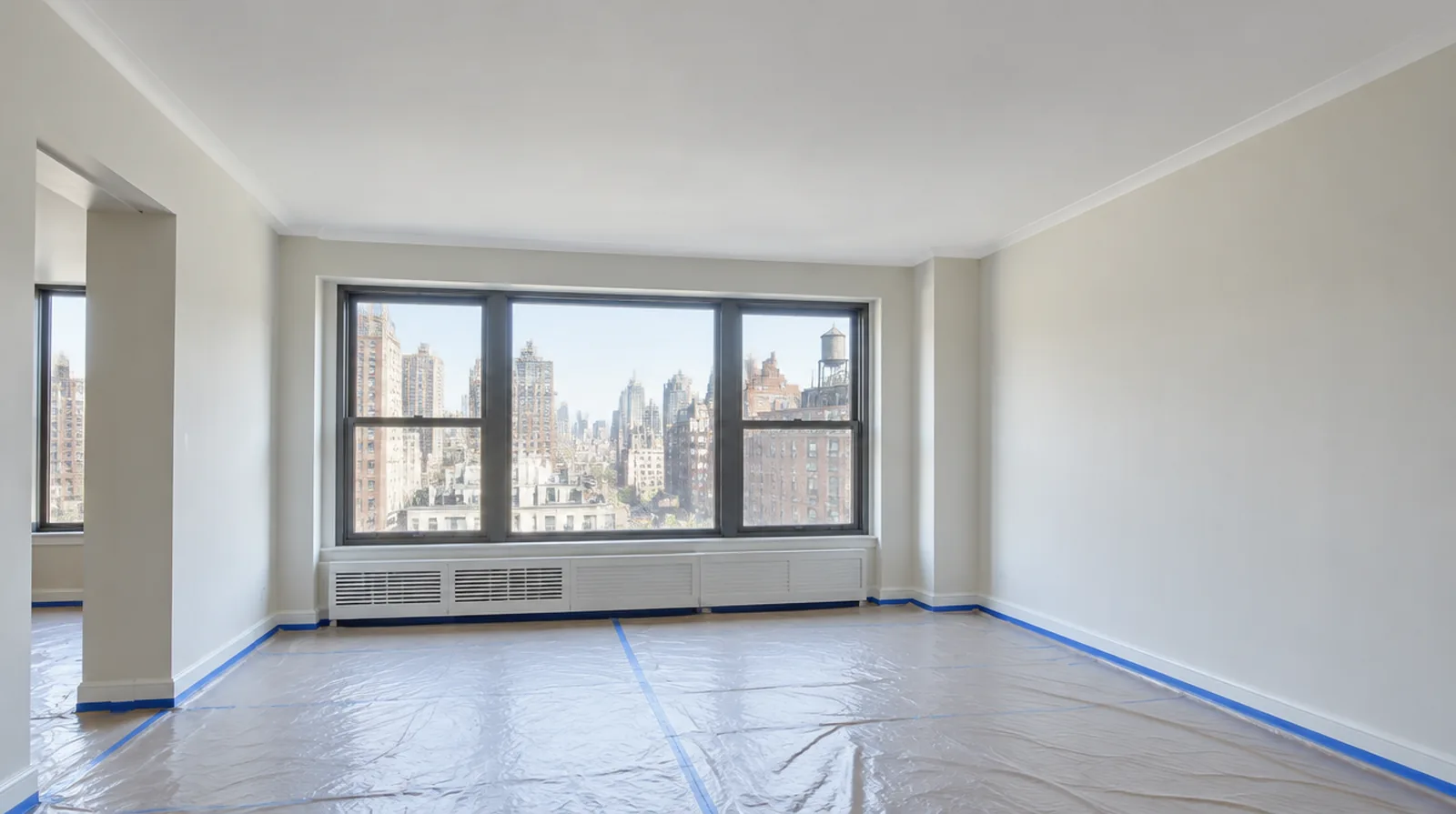
Address isolated stains
Inactive discoloration may require a primer selected to block the remaining stain. Primer selection depends on the remaining discoloration and ought not to be used to conceal active moisture. Where a surface has been painted many times, consider whether differences in texture or sheen will require a wider decorative treatment.
Treat the joints overhead
Reinforce the ceiling patch joints and taper the finishing layers well beyond their edges. Overhead seams can be conspicuous because windows often send light almost parallel to the ceiling. For an older repair with no clear history, describe when the mark first appeared and whether it has changed through more than one season.
Project context in New York
A measured sketch of the route is more useful than assuming that a sheet fitting the wall will fit the building. Building access arrangements and any required approvals should be settled independently of the surface repair itself.
Scope questions before finishing
If the surface condition is uncertain, allow for an assessment that can distinguish stable material from layers that should never be covered.
If the proposal requires return visits, identify the purpose of each stage and the intervals during which finishing material needs to remain undisturbed.
Where several contractors share the renovation, identify the inspection and handover milestones that determine when each following stage can proceed.
Where a neat final edge matters, agree whether the finish ends against existing trim or whether that trim will be removed and replaced.
If a household member is sensitive to dust, discuss containment and cleaning expectations before choosing how to stage the space work.
When damage followed other building work, describe the nearby alterations and the sequence between those changes and the first noticeable defect.
Where light reflects along the wall, inspect the complete plane instead of limiting the review to the edge immediately next to the repaired section.
For a distinctive existing pattern, retain a reference sample or detailed picture to make the matching discussion more specific.
At a surface receiving strong window light, review a dried trial from the side in addition to the normal straight view of the wall.
If the decorative coating is already chosen, share its sheen and color early because those choices influence how substrate preparation is judged.
If the space will remain occupied, identify a practical separation between the work area and the space that still needs daily access.
When the protected room includes a doorway, check the clearance for panel movement as well as the amount of space available for finishing tools.
Explore the New York drywall overview for related options, or read the project planning information before arranging the next stage.
More planning details for New York
A New York apartment project can be constrained by the route into the room before the size of the repair matters. Ask about lift reservations, shared corridor protection and the space available to turn a full board at the apartment entrance. Inside the room, tall windows can send light across a long wall and reveal a poorly feathered transition.