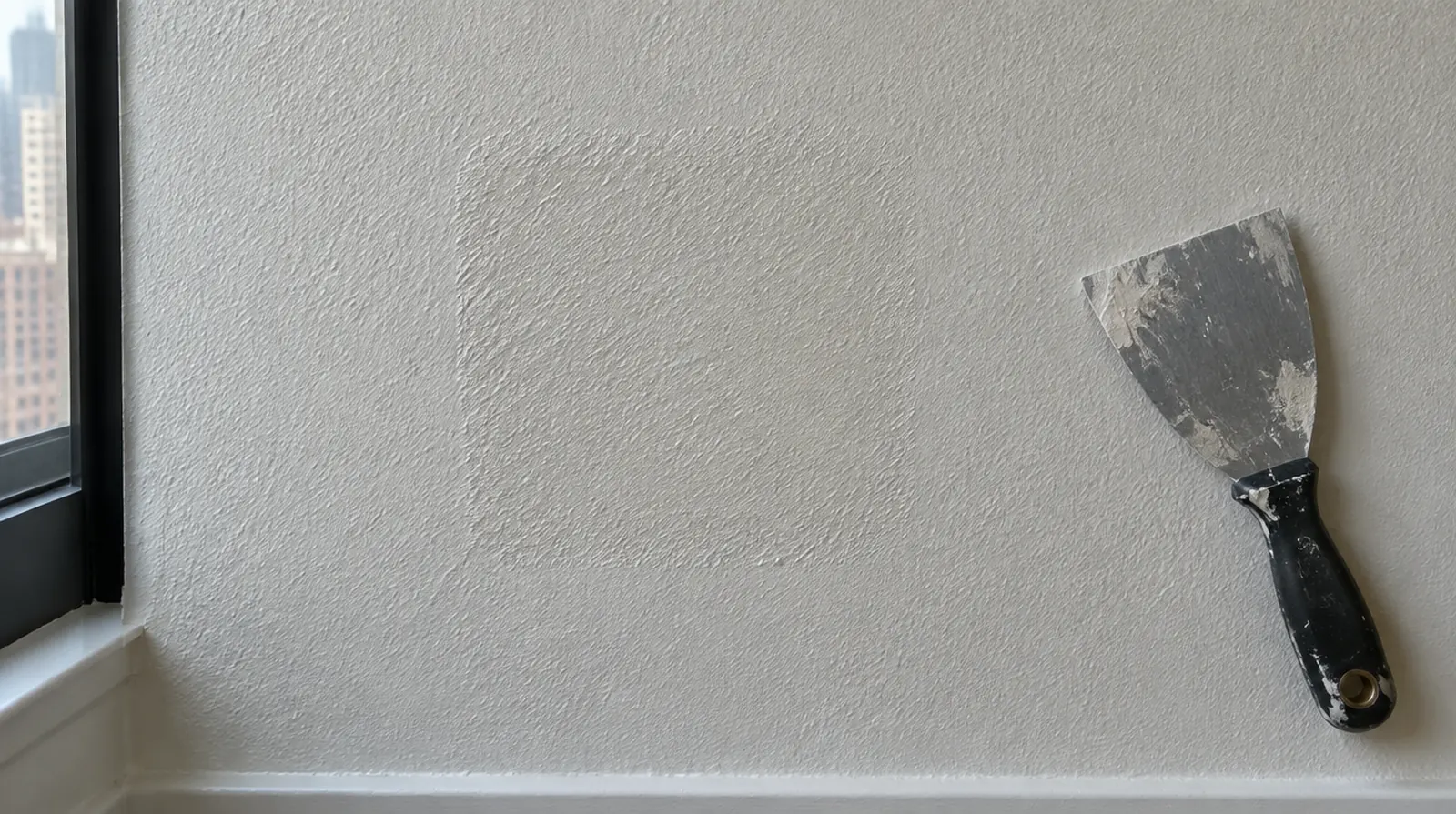
Check the underlying repair
A matching texture cannot hide a raised patch edge or a panel that sits proud of the wall. The base repair should be flat and firmly bonded before a decorative pattern is added. When a quote includes multiple visits, ask what happens during each stage and when the interior needs to remain undisturbed between coats.
Prepare a sample area
A small test helps establish particle size, spacing and the amount of flattening needed. Reviewing the sample before coating the full repair reduces uncertainty about the expected blend. For a distinctive existing pattern, retain a reference sample or detailed picture to make the matching discussion more specific.
Judge from normal positions
Assess the dried texture from everyday viewpoints rather than judging only a close view of a wet sample. The planned paint sheen and oblique light both belong in the final appearance discussion. For a limited patch requiring substantial setup, assess the complete package of access and protection rather than relating cost only to the opening size.
Control application conditions
Compound consistency and application distance affect how a sprayed pattern lands on the wall surface. A knockdown pass also depends on when the applied material reaches the right condition in that room. For a distinctive existing pattern, retain a reference sample or detailed picture to make the matching discussion more specific.
Allow time before painting
Let a new texture become ready for decoration rather than applying paint onto soft material. Establish whether the proposal includes that decorative stage or hands the surface over to another trade. If there is a fixed move in date, reserve sufficient time for the coating stages after drywall work rather than counting only the installation period.
Use appropriate primer
A new texture and the painted wall around it can take up paint unevenly. Choose suitable primer to support the coating system without unnecessarily flattening the intended pattern. If the ceiling or wall includes fittings, identify the person responsible for removing and reinstalling each item before the work begins.
Identify the existing pattern
First determine how the current texture creates its pattern and relief. The existing wall should be examined in the actual room lighting before selecting a matching method. When the history of a repair is uncertain, note when it became noticeable and whether its appearance has altered across different seasons.
Protect surrounding finishes
Mask adjacent materials against sprayed compound and other application debris. The protection plan should cover the actual application area rather than only the original hole. When panel replacement exposes a cavity, resolve any required inspection before that opening is closed and the finishing work begins.
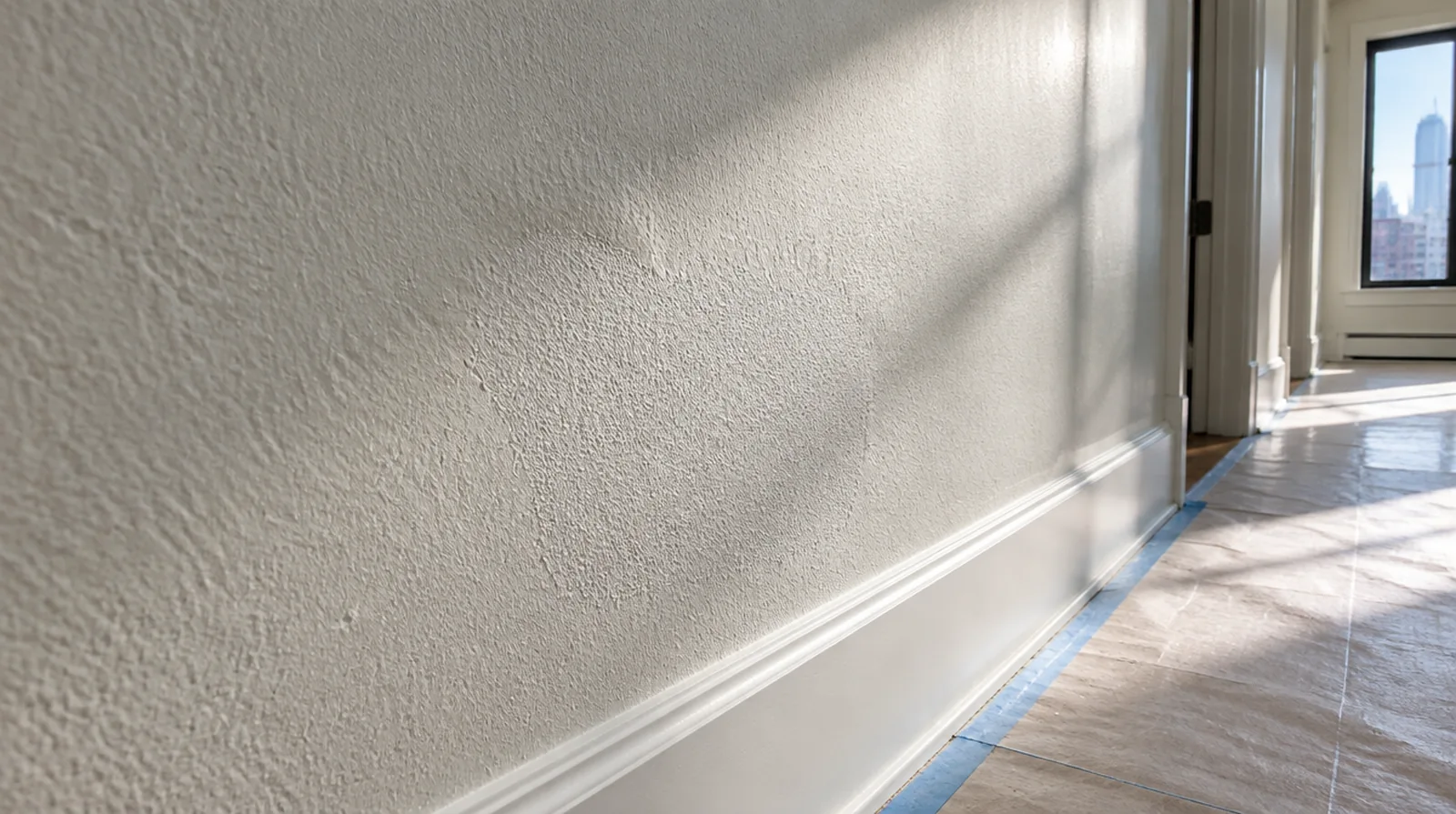
Consider hand applied surfaces
Troweled textures need attention to tool direction, pressure and spacing between repeated shapes. A sample is particularly helpful when the original finish was created without a regular sprayed pattern. When photographs are used for an initial discussion, include a wide room view as well as a close view so scale and surrounding finishes are understandable.
Study the paint layers
Repeated painting can soften an old pattern and change how its peaks reflect light. A fresh application could need adjustment to resemble the current surface rather than the original texture recipe. When damage followed other building work, describe the nearby alterations and the sequence between those changes and the first visible defect.
Project context in New York
If the apartment remains occupied, decide which space stays available for everyday use and how material will be stored between visits. Discuss that viewing angle before choosing the finishing boundary.
Scope questions before finishing
When concealed damage is possible, establish how additional findings and any proposed removal will be recorded before the scope changes.
At a surface receiving strong window light, review a dried trial from the side in addition to the normal straight view of the wall surface.
For work spread across different planes, record their dimensions separately and describe the boundary of the treatment on each surface.
When more damage could be hidden, ask how any added scope will be documented before extra material is removed or replaced.
Where several contractors share the renovation, identify the inspection and handover milestones that determine when each following stage can proceed.
If the wall work belongs to a broader renovation, coordinate its order with flooring, cabinetry and trim rather than scheduling finishing in isolation.
When comparing competing estimates, make sure their protection, surface finish and disposal allowances describe equivalent work before comparing the final prices.
Where a neat final edge matters, agree whether the finish ends against existing trim or whether that trim will be removed and replaced.
For a planned new wall mounted fixture, resolve its backing requirements while the cavity remains open instead of cutting into completed drywall later.
For a limited patch requiring substantial setup, assess the complete package of access and protection instead of relating cost only to the opening size.
At a ceiling or wall containing fittings, assign removal and reinstatement duties for the affected devices before repair access is needed.
If the problem developed after another renovation, explain which nearby materials or building systems changed before the damage became visible.
Explore the New York drywall overview for related options, or read the project planning information before arranging the next stage.
More planning details for New York
A New York apartment project can be constrained by the route into the room before the size of the repair matters. Ask about lift reservations, shared corridor protection and the space available to turn a full board at the apartment entrance. A measured sketch of the route is more useful than assuming that a sheet fitting the wall will fit the building.